

Articles
Rehabilitation After Hip Surgery for Seniors: A Complete Mobility & Recovery Guide
Undergoing joint replacement or fracture repair is a major medical event, and understanding rehabilitation after hip surgery for seniors is vital for ensuring a full recovery. Whether a surgical procedure is planned months in advance or triggered by an unexpected fall, the weeks following surgery dictate a senior's long-term independence, mobility, and overall quality of life. Without structured support, physical recovery can feel daunting for both the patient and their family caregivers.
At Changing Seasons Senior Living, our founder, Danny Kitchen, established our San Antonio-area care communities around a simple principle: high-quality care centers on personal relationships. Across our locations, including the Cottages at Danny Kaye, Honey's House of Helotes, Changing Seasons of Castroville, and Changing Seasons on Blanco, we help older adults navigate post-surgical healing with safety, dignity, and continuous professional guidance.
This comprehensive guide outlines what families can expect during post-operative care, essential safety precautions, and how structured physical therapy accelerates healing.
Key Stages in Rehabilitation After Hip Surgery for Seniors
The recovery process after hip replacement or repair surgery is a gradual journey that unfolds over several months. While individual timelines vary based on age, overall health, and the surgical approach used, medical guidelines from the American Academy of Orthopaedic Surgeons (AAOS) highlight several primary recovery phases.
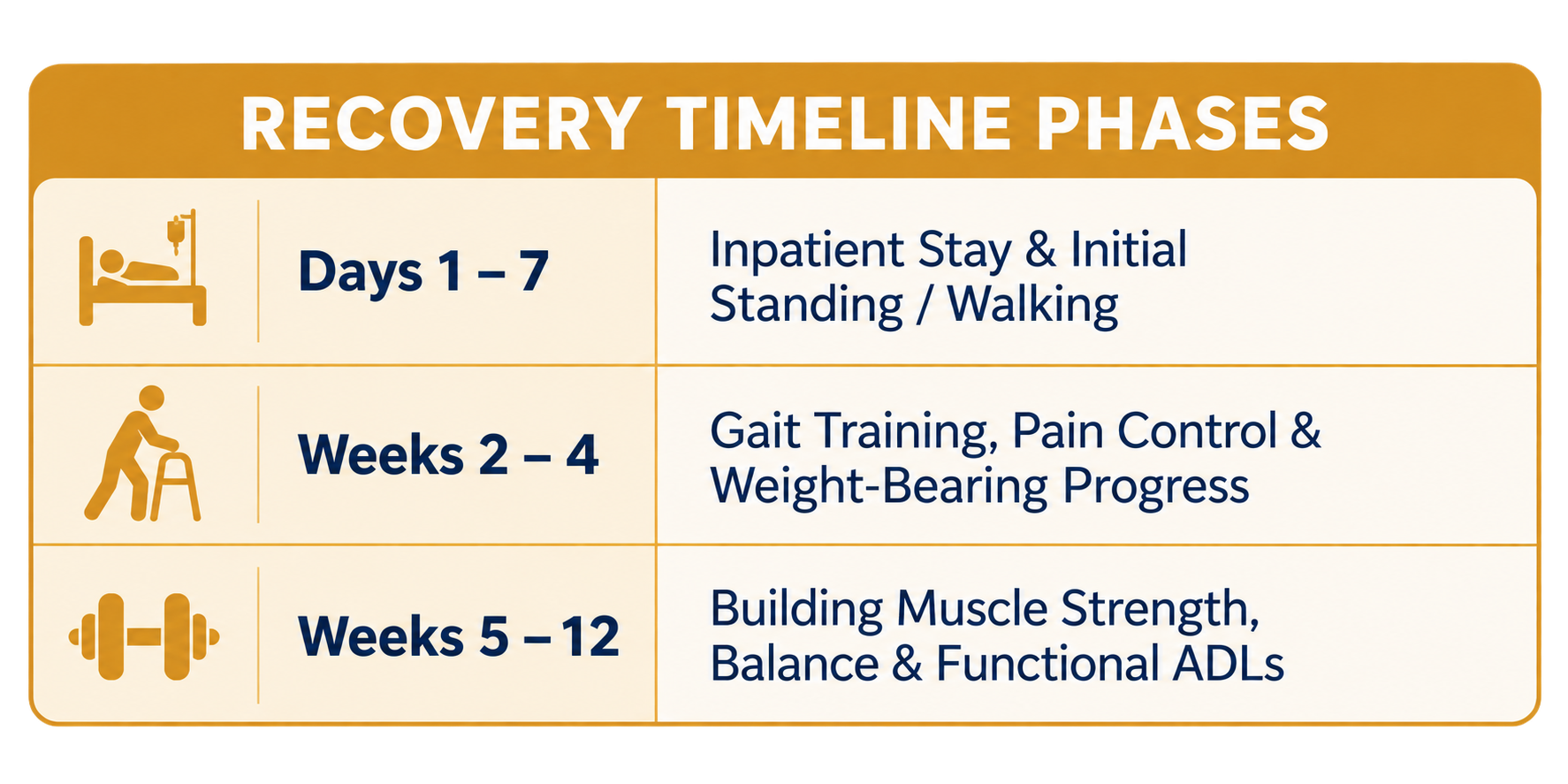
Phase 1: Days 1 through 7 (Initial Inpatient Recovery)
Physical therapy begins almost immediately after surgery, often within 24 hours of leaving the operating room. Early movement is critical to prevent blood clots, reduce joint stiffness, and maintain respiratory function.
- Standing and Short Transfers: Therapists assist patients in standing up and moving from the bed to a sturdy chair.
- Basic Mobility: Initial steps are taken using a walker or crutches under direct professional supervision.
- Pain Management: Care teams coordinate prescribed medications to keep discomfort manageable so physical exercises can proceed comfortably.
Phase 2: Weeks 2 through 4 (Restoring Basic Function)
During the initial weeks of rehabilitation after hip surgery for seniors, physical therapists focus on restoring basic joint function and gradually increasing weight-bearing capacity.
- Gait Training: Exercises concentrate on proper foot placement and stride length to prevent limping or compensatory movement patterns.
- Incision Healing: Surgical wounds are monitored closely for signs of infection, swelling, or delayed healing.
- Targeted Exercises: Gentle leg lifts, ankle pumps, and knee bends are introduced to strengthen surrounding gluteal and thigh muscles.
Phase 3: Weeks 5 through 12 (Strength and Long-Term Mobility)
As internal tissue heals, therapy shifts toward building stamina, balance, and independence in performing daily tasks.
- Advanced Balance Work: Exercises target core and pelvic stability to reduce the risk of future falls.
- Stair Navigation: Therapists teach safe techniques for climbing and descending stairs using handrails and supportive devices.
- Transitioning Assistive Devices: Patients gradually move from a walker to a cane, and eventually toward unassisted walking when approved by their orthopedic surgeon.
Critical Hip Precautions and Preventing Complications
A critical aspect of successful rehabilitation after hip surgery for seniors involves strict adherence to movement precautions. Following a hip replacement, the surrounding joint capsule and soft tissues require time to mend. Missteps or improper joint positioning can lead to joint dislocation, requiring emergency medical intervention.
According to post-operative guidelines from the Mayo Clinic, seniors must follow key movement restrictions during the first 6 to 12 weeks of recovery:
- Avoid Bending Past 90 Degrees: Do not flex the waist forward beyond a right angle. This means avoiding low chairs, soft couches, or reaching down to the floor to pick up objects.
- Do Not Cross Legs: Keep legs slightly separated at all times, whether sitting, standing, or lying in bed. Use a firm abduction pillow between the knees when sleeping on your side.
- Avoid Inward Leg Rotation: Do not turn the toes or knees inward toward the center of the body when standing or sitting.
- Avoid Twisting at the Waist: Always pivot the feet and entire body as a single unit when turning, rather than twisting the torso while the feet remain planted.
Essential Adaptive Equipment
To maintain these precautions safely, seniors rely on specialized adaptive tools:
- Raised Toilet Seats: Elevates the seating surface to prevent deep hip flexion when using the bathroom.
- Long-Handled Reachers and Sock Aids: Allows seniors to dress and retrieve items without bending past 90 degrees.
- Shower Chairs and Grab Bars: Provides stable, slip-resistant seating during bathing, minimizing fall hazards.
The Role of Onsite Physical Therapy in Post-Op Recovery
Consistent, expert physical therapy is the engine that drives physical recovery. However, traveling to outpatient therapy clinics multiple times a week can be exhausting for post-surgical patients and logistically challenging for family members.
Through our partnership with specialized therapy providers, our residents benefit directly from onsite physical therapy programs. Having licensed physical and occupational therapists conduct individualized sessions right inside the community offers significant clinical advantages.
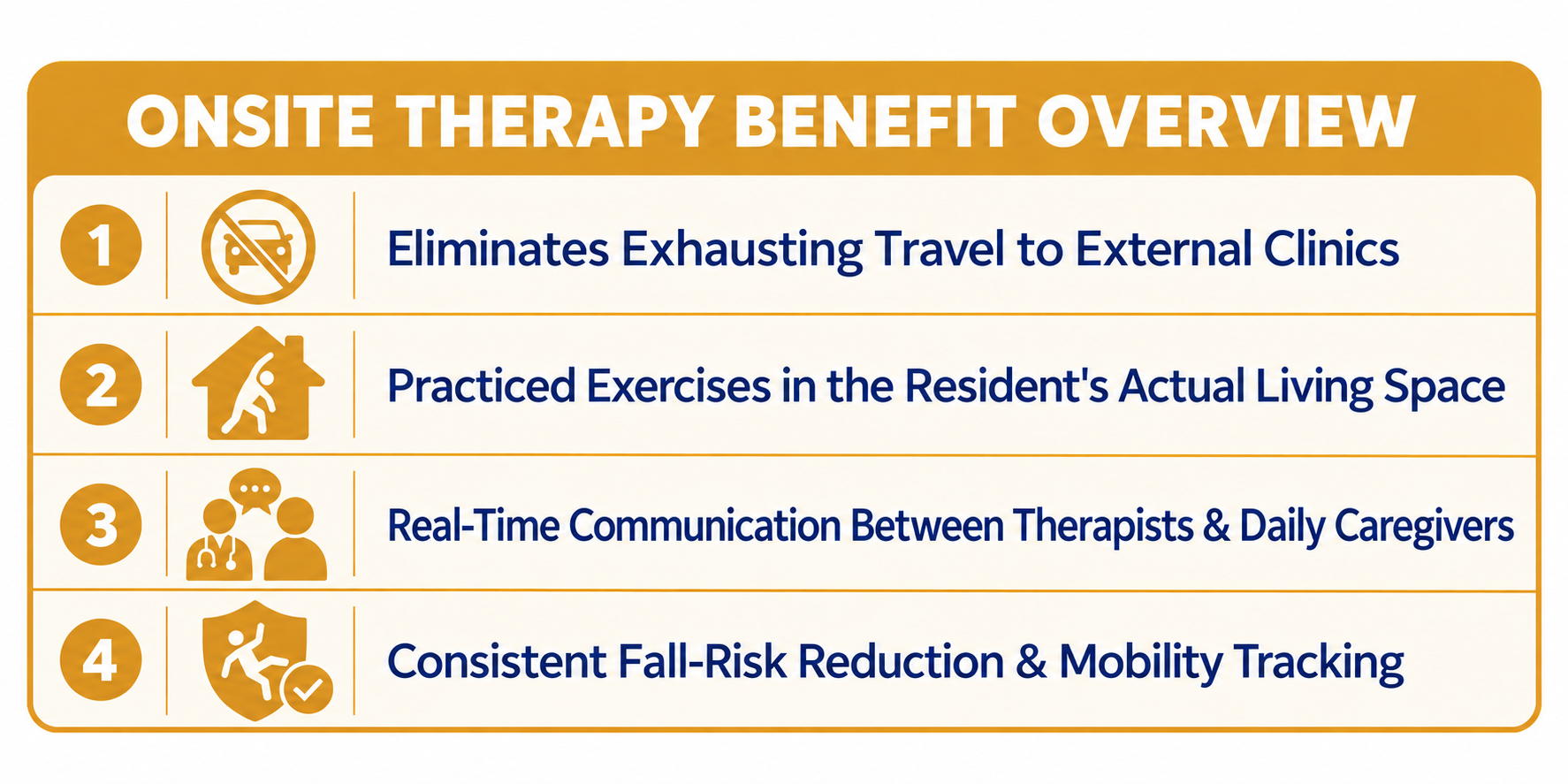
Research from the Centers for Disease Control and Prevention (CDC) emphasizes that structured balance and gait training drastically lowers fall risks among older adults. When therapists practice mobility within the resident's actual living environment, navigating doorways, bathroom transfers, and dining room seating, functional gains transfer directly into daily life.
Why Assisted Living Simplifies Post-Surgical Healing
Recovering at home after hip surgery often places an overwhelming burden on family caregivers. Standard private homes present numerous physical hazards, including steep staircases, narrow hallways, slippery bathroom tiles, and throw rugs.
Structured rehabilitation after hip surgery for seniors eliminates many of the home hazards that cause post-operative complications. Choosing a supportive care setting provides immediate access to essential recovery resources:
- 24/7 Personal Assistance: Caregivers are available around the clock to assist with safe transfers, showering, dressing, and toileting while joint precautions remain in effect.
- Medication Management: Trained staff ensure pain management schedules and post-surgical antibiotics or blood thinners are administered precisely as prescribed.
- Nutritional Support: Proper wound healing requires elevated protein and nutrient intake. Freshly prepared, balanced meals are provided daily without the worry of meal preparation.
- Built-In Safety Features: Built-in grab bars, wide doorways, walk-in showers, and flat, step-free flooring ensure a safe environment throughout the recovery journey.
When evaluating care settings, reviewing our analysis on small care homes vs. large assisted living communities can help your family select the environment best suited for your parent's mobility needs.
Planning Your Parent's Recovery Journey
Whether your parent requires short-term respite care during their initial recovery weeks or a permanent transition into a supportive community, planning ahead ensures a smooth transition.
Families evaluating care options should review our practical guides on assisted living costs in San Antonio to understand pricing structures, as well as our step-by-step roadmap on how to transition an aging parent into assisted living.
At Changing Seasons Senior Living, all four of our local communities hold full-spectrum licensing. This means whether your parent enters needing simple post-surgical support or eventually requires comprehensive ongoing care, they can remain in their familiar room surrounded by caregivers who know them personally. For seniors managing cognitive changes alongside surgical recovery, our dedicated Cottag es at Danny Kaye memory care community offers a secure, specialized environment tailored to their unique needs.
Partner with San Antonio's Trusted Care Team
Choosing the right environment for rehabilitation after hip surgery for seniors allows family members to rest easy knowing their loved one is safe, comfortable, and receiving expert support every day.
At Changing Seasons Senior Living, Danny Kitchen and our entire care family are dedicated to helping South Texas seniors regain their independence and quality of life.
Schedule a Visit Today or call our San Antonio care team at (210) 540-8288 to discuss post-surgical rehabilitation options and tour our communities.
See also:
Recognizing the Right Time: A Guide for Families Considering Assisted Living
The Power of Connection: Why Social Life is the Heart of Senior Living
Author: Changing Seasons Senior Living Team

Even if we are not the right fit, let us be your resource. We know the communities in this area and can help you find the right place for your loved one.