

Articles
Managing Sundowning in Seniors with Dementia in San Antonio: A Complete Guide
When late afternoon arrives across South Texas, many family caregivers notice a sudden, unsettling shift in their parent's mood and behavior. An aging mom or dad who was cheerful during breakfast may become increasingly anxious, irritable, disoriented, or vocal as the sun begins to set. When navigating sundowning in seniors with dementia San Antonio families often face profound emotional and physical exhaustion. Understanding why these late-day behavioral changes happen and implementing proven management techniques can restore peace to your home and protect your loved one's well-being.
At Changing Seasons Senior Living, our founder, Danny Kitchen, created our family of care communities to serve as a supportive resource for local caregivers. Across our locations, including our dedicated Cottages at Danny Kaye memory care community, Honey's House of Helotes, Changing Seasons of Castroville, and Changing Seasons on Blanco, our care team specializes in non-pharmacological behavioral management and gentle validation therapy.
What Is Sundowning Syndrome and What Causes It?
Sundowning, also called sundown syndrome, is a neurological pattern rather than an isolated disease. It affects up to 20 percent of individuals living with Alzheimer's disease or other progressive cognitive impairments, causing heightened behavioral distress during twilight and evening hours.
According to clinical research from the National Institute on Aging (NIA), sundowning is primarily driven by progressive damage to the brain's biological clock, known as the circadian rhythm. As neurodegenerative changes alter the suprachiasmatic nucleus, the brain loses its natural ability to distinguish between day and night cycles.
Understanding the underlying biological mechanisms behind sundowning in seniors with dementia San Antonio allows family members to view behavioral spikes as physiological distress responses rather than intentional stubbornness or aggression.
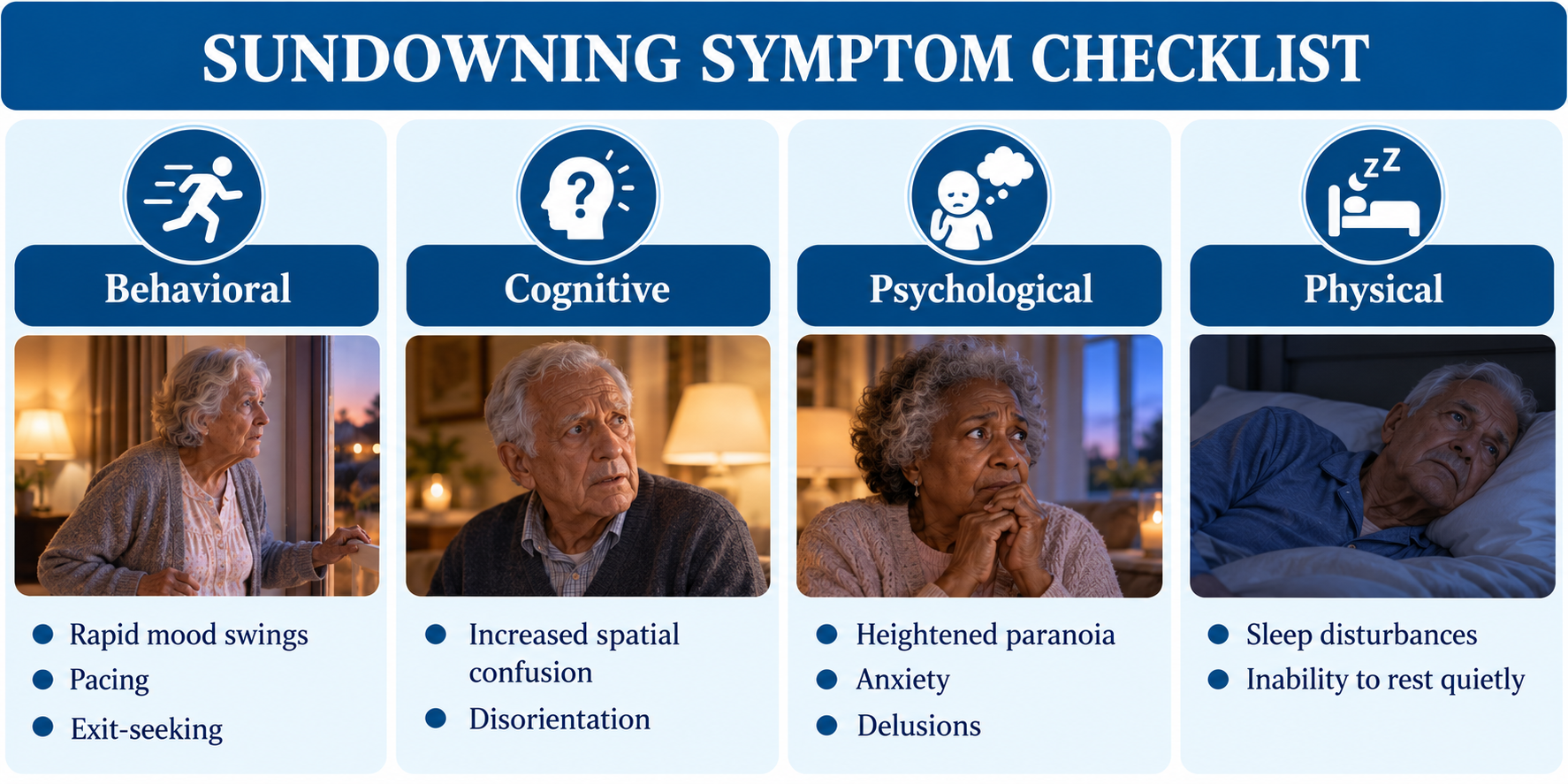
Common symptoms that intensify in the late afternoon and early evening include:
- Pacing, exit-seeking, or shadowing family members closely around the home.
- Heightened irritability, rapid emotional shifts, or uncharacteristic vocal agitation.
- Deep paranoia, such as insisting that strangers are inside the residence or demanding to go home when sitting in their own living room.
- Visual misinterpretations or confusion as natural sunlight transitions into indoor shadows.
Environmental Triggers Unique to South Texas Homes
Environmental factors in standard private residences often worsen late-afternoon disorientation. In Bexar and Medina counties, bright mid-day sunlight gives way quickly to long afternoon shadows, creating sharp visual contrast inside living rooms and hallways.
Guidance from the Alzheimer's Association highlights that sensory overstimulation and visual confusion trigger anxiety in impaired brains. In a typical home setting, several environmental factors compound sundowning symptoms:
- Shadows and Visual Glare: Fading daylight produces long, dark shadows across floors and walls. Individuals with impaired depth perception may interpret these shadows as physical obstacles, holes, or intruders.
- Accumulated Daily Fatigue: After a full day of processing sensory input and trying to communicate, a senior's cognitive reserves become depleted by late afternoon.
- Household Noise and Evening Activity: The natural evening rush of meal preparation, television noise, and family members returning from work creates a chaotic sensory environment.
5 Strategies for Managing Sundowning in Seniors with Dementia in San Antonio
Proactive daily habits and environmental adjustments can significantly reduce the frequency and severity of evening agitation.
1. Optimize Interior Lighting and Circadian Cues
Light is the primary cue that regulates human sleep-wake cycles. According to public health guidance from the Centers for Disease Control and Prevention (CDC), morning sunlight exposure helps reinforce healthy circadian rhythms.
- Open blinds early in the morning to fill living areas with natural sunlight.
- Before twilight begins, turn on bright overhead indoor lights to eliminate dark corners and prevent disorienting shadows.
2. Establish Predictable Daily Routines
Predictability creates profound psychological security for older adults with cognitive impairment. Keep meal schedules, waking hours, and bedtime preparation strictly consistent seven days a week. Schedule complex medical appointments or baths in the morning when your parent feels most rested.
3. Adjust Nutrition and Limit Afternoon Stimulants
Dietary choices play a direct role in evening behavior regulation.
- Eliminate caffeinated coffee, sodas, and sugary treats after 12:00 PM.
- Serve your parent their primary meal at lunch and offer a lighter, easily digestible dinner to avoid gastrointestinal discomfort before sleep.
4. Apply Gentle Validation and Therapeutic Redirection
When a senior becomes anxious or insists they must leave for work, arguing or using logic usually escalates panic. Instead, validate their feelings with empathy. Say, "You are completely safe here, and I am right here with you." Then gently redirect their attention to a comforting task, such as folding soft linens, sipping warm herbal tea, or listening to vintage music.
5. Create a Soothing Evening Environment
Reduce sensory noise as 4:00 PM approaches. Turn off loud news broadcasts, play soft instrumental music, and keep household conversations calm and unhurried.
When Home Care Needs Professional Memory Support
While home modifications provide relief, managing sundowning in seniors with dementia San Antonio around the clock often leads to severe caregiver burnout. When late-afternoon agitation leads to unescorted wandering or nighttime sleep deprivation, transitioning to a specialized environment provides essential safety for your parent and peace of mind for your family.
At Changing Seasons Senior Living, our purpose-built communities are designed to mitigate sundowning triggers naturally:
- Low-Sensory Architecture: Intimate single-story layouts avoid long, echoey corridors and confusing multi-level elevator lobbies.
- Consistent Caregiver Ratios: Long-tenured staff build deep personal familiarity with every resident, recognizing early agitation signs and applying gentle redirection before panic escalates.
- Enclosed Courtyards: Secure garden walkways allow residents to enjoy fresh air and sunshine safely during peak restlessness hours without exit-seeking risks.
When considering long-term care stability, review how our full-spectrum licensing assists in preventing relocation stress in memory care. Families planning their budget can also review assisted living costs in San Antonio and our step-by-step roadmap on how to transition an aging parent into assisted living.
Partner with Changing Seasons Memory Care
You do not have to navigate the exhausting challenges of sundowning in seniors with dementia San Antonio alone. Our care team is here to support your family every step of the way with empathy, dignity, and clinical expertise.
Schedule a Visit Today or call our San Antonio care team at (210) 540-8288 to learn how our specialized memory care communities provide a safe, calm home for your loved one.
See also:
Recognizing the Right Time: A Guide for Families Considering Assisted Living
The Power of Connection: Why Social Life is the Heart of Senior Living
Author: Changing Seasons Senior Living Team

Even if we are not the right fit, let us be your resource. We know the communities in this area and can help you find the right place for your loved one.