

Articles
Navigating Memory Loss: Early Warning Signs and Choosing Memory Care in San Antonio
Noticing changes in a parent or spouse’s cognitive health is rarely a single, dramatic moment. More often, it is a gradual realization compiled from tiny observations over months: an unopened stack of bills, a repeatedly missed doctor’s appointment, or a look of sudden confusion in a familiar San Antonio neighborhood.
When subtle memory slips turn into ongoing safety concerns, family caregivers often find themselves overwhelmed, wondering where normal aging ends and cognitive decline begins, and what step to take next.
Understanding the early warning signs of Alzheimer’s disease and other forms of dementia is the first step toward securing proper support. Knowing what to look for and exploring memory care options in San Antonio early allows families to plan proactively, protect their loved one's dignity, and avoid crisis-driven decisions.
5 Signs It May Be Time to Consider Specialized Memory Care
While occasional forgetfulness—like misplacing car keys—is a common part of aging, progressive memory loss affects a senior's ability to navigate daily life safely. If you notice several of the following patterns, it may indicate that standard assisted living or home care is no longer enough.
1. Wandering or Disorientation in Familiar Environments
One of the most concerning signs of cognitive decline is spatial disorientation. A loved one might get lost driving home from their usual H-E-B or become confused about where they are while walking around their own neighborhood. When a senior loses the ability to navigate familiar surroundings, the risk of wandering increases significantly, making a secure environment essential.
2. Mismanaging Medications and Daily Meals
Dementia directly impacts executive functioning—the brain's ability to plan, organize, and execute multi-step tasks. You might notice:
- Prescription pill bottles remaining full long past their refill date or, conversely, being taken too frequently.
- Spoiled food left in the refrigerator or weight loss due to forgotten meals.
- Unexplained difficulties balancing a checkbook or keeping up with monthly utility bills.
3. Declining Personal Hygiene and Household Safety Hazards
As cognitive challenges progress, basic self-care often slips. A person who was historically meticulous about their appearance may wear the same clothes for days or skip bathing. Unsafe home situations also become common, such as burners left on after cooking, uncollected trash accumulating, or heating/cooling systems left unadjusted during extreme South Texas weather.
4. Severe Caregiver Burnout Among Family Members
Caring for a family member with memory loss is physically demanding and emotionally exhausting. When family caregivers experience chronic sleep deprivation, anxiety, or health deterioration of their own, the care arrangement becomes unsustainable. Admitting that you need professional support is not giving up; it is ensuring your loved one gets the dedicated oversight they require while allowing you to return to being a supportive son, daughter, or spouse.
5. Increased Anxiety, Confusion, or "Sundowning"
Dementia alters how the brain processes environmental stimuli. Seniors may exhibit mood shifts, paranoia, or heightened distress in late afternoon or early evening, a phenomenon known as sundowning. In a standard home setting without structured routines and trained staff, managing these behavioral changes can quickly become overwhelming for family members.
The Power of Purpose-Built Memory Care Cottages
When families begin researching options for memory care in San Antonio, they are often met with massive, multi-story institutional facilities. For individuals with dementia, large environments with long hallways, high ceiling noise, and constant staff turnover can trigger sensory overload, escalating agitation and confusion.
Research and daily experience consistently show that smaller, residential-style settings yield vastly superior outcomes for memory impairment.
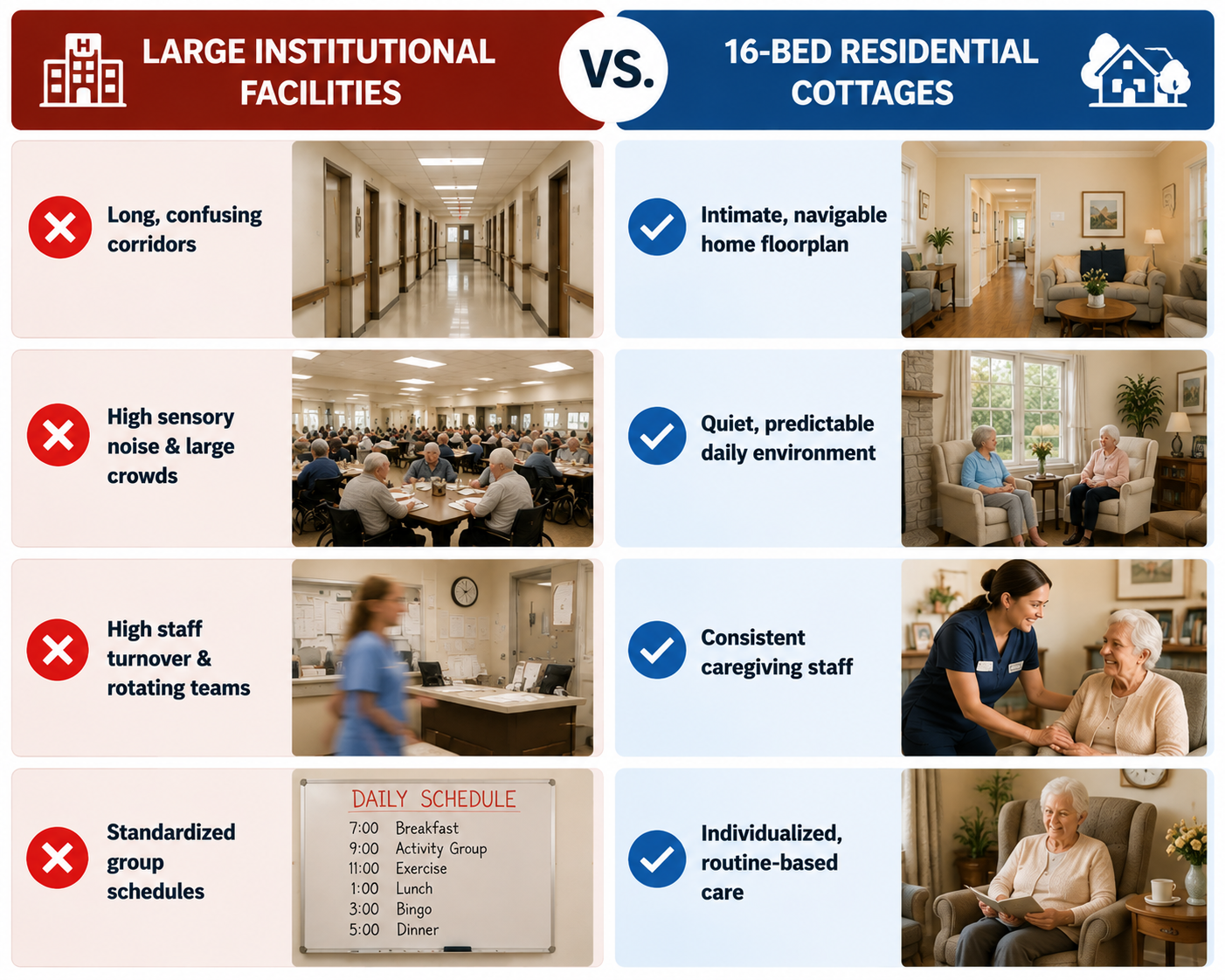
At Changing Seasons Living, our specialized memory care is housed within our 16-bed residential cottage model, notably at our Cottages at Danny Kaye location in San Antonio.
- Intimate, Home-Like Navigation: With only 16 beds, residents can easily find their bedroom, living room, and dining table without feeling lost or overwhelmed.
- Secure Outdoor Spaces: Enclosed courtyards allow residents to enjoy fresh air and sunshine safely without the risk of unescorted wandering.
- High Caregiver-to-Resident Ratios: Consistent staffing means our team gets to know each resident's personal history, triggers, favorite activities, and communication style.
- Tailored Daily Engagement: Activities are built around familiar domestic routines—gentle music, sensory engagement, gardening, and simple crafts, that foster purpose rather than frustration.
Seamless Transitions Across the Changing Seasons Network
One unique advantage of the Changing Seasons care model is our network continuity. If your loved one moves into one of our active assisted living communities, such as our Helotes, Castroville, or Blanco Road locations—and later develops advanced cognitive care needs, your family won't have to start your search over from scratch.
Because our locations share leadership, clinical standards, and a family-first philosophy, transitions between our general assisted living residences and our dedicated memory care cottage at Danny Kaye are smooth, supportive, and stress-free.
How to Prepare for Your Memory Care Tour
Evaluating a memory care community requires looking beyond physical amenities to observe how caregivers interact with residents. When touring facilities in San Antonio, keep this practical checklist in mind:
- Observe Staff Interactions: Are caregivers speaking calmly at eye level with residents, using soft tones and patient re-direction?
- Check Safety Measures: Are emergency response systems clear? Are exterior doors securely monitored without feeling prison-like?
- Evaluate Dining: Is the dining atmosphere relaxed? Are meals adapted for residents who may have trouble using utensils or sitting for long periods?
- Ask About Financial Planning: Memory care is a significant financial commitment. Ask the director about long-term care insurance, private pay structures, or how to utilize VA Aid & Attendance Benefits if your loved one is a veteran or surviving spouse.
Take the Next Step with Changing Seasons Living
Recognizing that a parent or spouse needs memory care is difficult, but you do not have to navigate this transition alone. Seeing a secure, home-like environment firsthand often brings immediate peace of mind to families.
Schedule a private, low-pressure tour at the Cottages at Danny Kaye today to experience how our 16-bed memory care cottage supports independence, safety, and dignity for San Antonio seniors.
See also:
Recognizing the Right Time: A Guide for Families Considering Assisted Living
The Power of Connection: Why Social Life is the Heart of Senior Living
Author: Changing Seasons Senior Living Team

Even if we are not the right fit, let us be your resource. We know the communities in this area and can help you find the right place for your loved one.