

Articles
Dementia Wandering Safety Precautions San Antonio: A Complete Family Guide
When an aging parent living with memory loss begins to show signs of restlessness or attempts to leave home unescorted, establishing effective dementia wandering safety precautions San Antonio families can trust becomes a top caregiving priority. Wandering is one of the most alarming behaviors associated with Alzheimer's disease and related forms of dementia. A loved one who becomes disoriented can quickly lose their sense of direction, even in their own longtime neighborhood.
At Changing Seasons Senior Living, our founder, Danny Kitchen, established our San Antonio care communities to provide local families with compassionate guidance and secure living environments. Across our four locations: the Cottages at Danny Kaye, Honey's House of Helotes, Changing Seasons of Castroville, and Changing Seasons on Blanco, we prioritize cognitive safety while preserving personal dignity and freedom of movement.
This comprehensive guide examines the psychological triggers behind wandering, critical home modifications, climate safety hazards in South Texas, and how specialized memory care provides permanent peace of mind.
Understanding Why Seniors with Dementia Wander
To implement effective safety measures, family members must first understand that wandering is rarely aimless. In most cases, wandering is driven by underlying cognitive, emotional, or physical needs that an individual with memory loss cannot articulate verbally.
According to research from the Alzheimer's Association, six out of ten people living with dementia will wander at least once, and many will do so repeatedly if environmental triggers are not addressed.
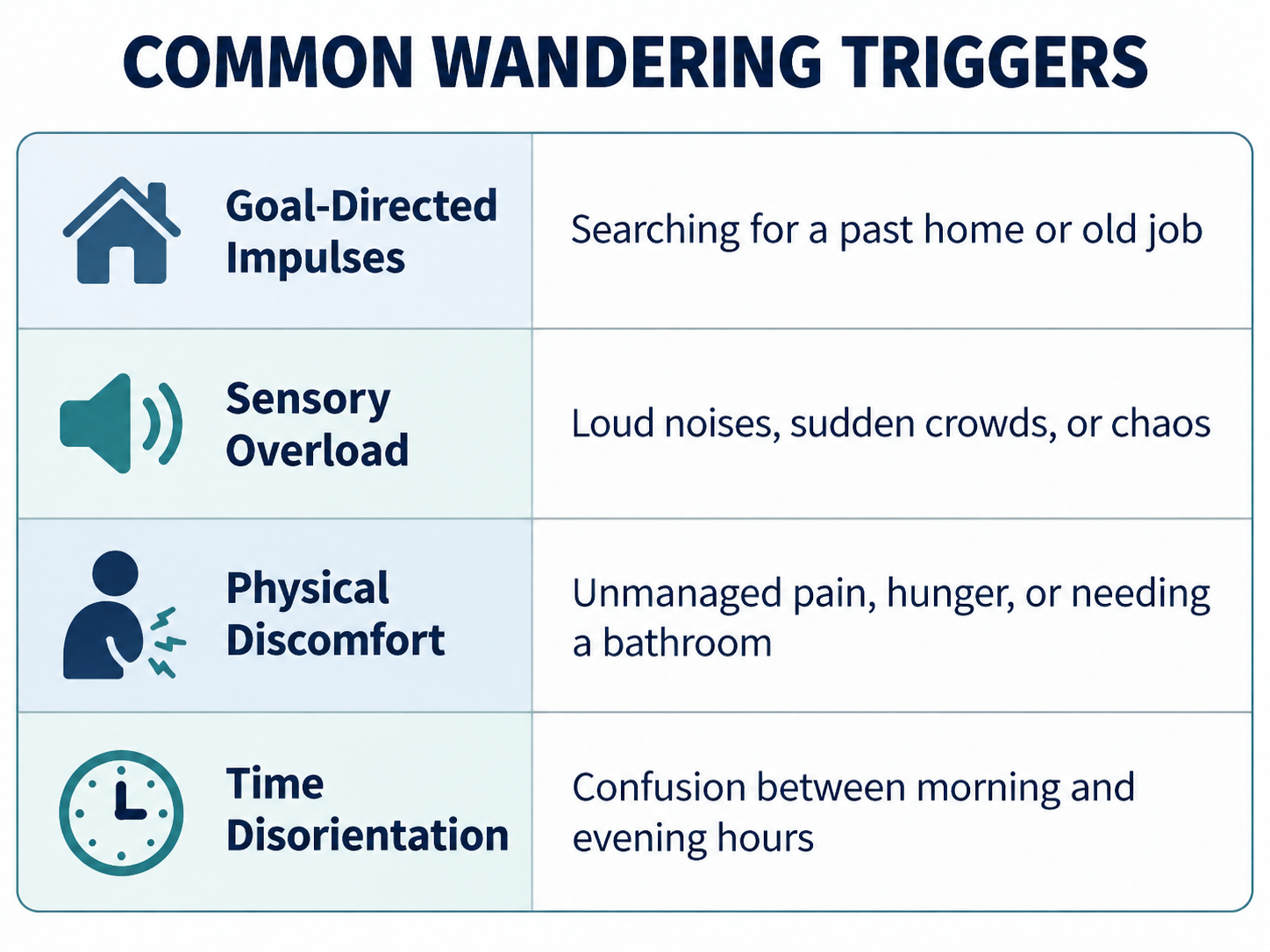
Common psychological and environmental drivers include:
- Searching for the Familiar: Seniors often leave their current residence seeking a childhood home, a former workplace, or a deceased relative, driven by long-term memories that remain intact while short-term awareness fades.
- Stress and Environmental Overstimulation: Loud televisions, bustling social gatherings, or unfamiliar room shadows can trigger panic, prompting a senior to look for an escape route.
- Physical Need Expression: Pacing or exit-seeking often signals a physical need, such as searching for a restroom, attempting to walk off physical joint pain, or looking for food.
- Late-Afternoon Restlessness: Wandering frequently peaks during twilight hours, closely linked to sundowning in seniors with dementia.
Essential Dementia Wandering Safety Precautions San Antonio Families Should Implement at Home
When evaluating dementia wandering safety precautions San Antonio caregivers often start by securing physical doorways and living spaces. Making proactive home adjustments reduces elopement risks while creating a calmer daily environment.
Guidance published by the National Institute on Aging (NIA) recommends combining physical barriers with subtle environmental adaptations:
1. Secure Doors and Windows Discretely
Installing deadbolts or slide locks either high above eye level or low near the floor prevents individuals from easily opening exterior doors. Placing full-length dark mats in front of exit doors can also deter exit-seeking, as seniors with altered depth perception often perceive dark mats as deep physical holes.
2. Disguise Exit Routes
Covering exterior doors with curtains that match the surrounding walls or placing removable wall hangings over doorframes reduces the visual temptation to leave. Keep coats, purses, car keys, and shoes hidden out of sight so they do not trigger impulses to go outside.
3. Utilize Smart Alarm Technology and Wearable Trackers
Modern technology provides immediate safety alerts for long-distance and local caregivers alike. Installing door contact sensors, pressure-sensitive floor mats near the bed, or wearable GPS smartwatches alerts family members instantly if a loved one leaves a secure room.
4. Establish a Local Neighborhood Safety Network
Inform trusted neighbors, local police departments, and community managers that your parent lives with memory loss. Provide them with your emergency phone number and a recent photograph so they can alert you immediately if they notice your parent walking alone.
South Texas Climate Hazards and Outdoor Safety Risks
In Bexar and Medina counties, outdoor wandering carries heightened health risks due to regional weather patterns. Unseasonably warm autumn days, intense sunshine, and sudden heat spikes pose immediate physical dangers for disoriented seniors.
According to public health reports from the Centers for Disease Control and Prevention (CDC), older adults with cognitive impairment are particularly vulnerable to rapid dehydration, heat exhaustion, and sunstroke because their body temperature regulation mechanisms are impaired.
When a senior wanders outdoors in South Texas without water or proper clothing:
- Dehydration and heat exhaustion can develop in less than 30 minutes.
- Spatial disorientation increases rapidly, making it impossible for the senior to locate shade or retrace their steps.
- Unsteady gait on uneven terrain or gravel paths significantly increases fall risks.
How Specialized Memory Care Eliminates Wandering Hazards
While home modifications offer initial protection, maintaining 24/7 vigilance at home often leads to severe caregiver fatigue. Beyond basic door locks, comprehensive dementia wandering safety precautions San Antonio experts recommend are built directly into the architectural design of specialized care settings.
At Changing Seasons Senior Living, our dedicated Cottages at Danny Kaye memory care community provides a secure environment where residents retain independence without physical barriers:
- Enclosed Courtyard Walking Loops: Continuous, step-free outdoor walking paths allow residents to satisfy the natural urge to walk and enjoy fresh air safely within fully secured perimeter courtyards.
- Card-Access Security Systems: All exterior doors feature discreet electronic access controls that prevent unescorted exit-seeking while maintaining an open, residential atmosphere.
- Failure-Free Daily Engagement: Redirecting restless physical energy into therapeutic memory care activities keeps residents engaged, drastically reducing anxiety and pacing.
Long-Term Care Stability for Your Family
When home care modifications no longer guarantee continuous safety, professional memory care offers built-in dementia wandering safety precautions San Antonio seniors need for long-term health.
Choosing a community with full-spectrum licensing plays a crucial role in preventing relocation stress in memory care. At Changing Seasons Senior Living, our full-spectrum licensing guarantees that as physical or cognitive needs progress, residents remain in their familiar private rooms without facing stressful relocations.
If your family is currently exploring long-term care options, reviewing our transparent breakdown of assisted living costs in San Antonio and reading our step-by-step guide on how to transition an aging parent into assisted living can help you plan your next steps with total confidence. You can also compare community environments by reading our analysis on small care homes vs. large assisted living communities.
Partner with San Antonio's Memory Care Specialists
Protecting an aging parent from wandering hazards requires dedicated support, empathy, and professional expertise. At Changing Seasons Senior Living, Danny Kitchen and our experienced care team are here to support your family every step of the way.
Schedule a Visit Today or call our San Antonio care team at (210) 540-8288 to learn how our secure, home-like memory care communities keep your loved one safe.
See also:
Recognizing the Right Time: A Guide for Families Considering Assisted Living
The Power of Connection: Why Social Life is the Heart of Senior Living
Author: Changing Seasons Senior Living Team

Even if we are not the right fit, let us be your resource. We know the communities in this area and can help you find the right place for your loved one.