

Articles
Alzheimer’s Awareness Month: Finding Compassionate Alzheimer’s Memory Care in San Antonio
Every November, National Alzheimer’s Disease Awareness Month brings critical focus to a condition affecting millions of American households. Across the United States in 2026, an estimated 7.4 million adults aged 65 and older live with Alzheimer’s disease, with Texas remaining among the states experiencing the fastest growth in dementia diagnoses. For family caregivers in Bexar County, an Alzheimer's journey often starts with subtle moments of forgetfulness before progressing into complex behavioral and physical needs. When around-the-clock safety and personalized cognitive support become necessary, finding trusted Alzheimer's memory care San Antonio families can rely on is one of the most loving and protective decisions an adult child can make.
At Changing Seasons Senior Living, our owner Danny Kitchen established our care philosophy on deep personal experience. Having grown up in senior care while watching his mother operate residential communities, Danny built Changing Seasons around authentic relationships rather than rigid corporate formulas. Across our four local settings, including our dedicated memory care neighborhood at the Cottages at Danny Kaye, Honey's House of Helotes, Changing Seasons of Castroville, and Changing Seasons on Blanco, our mission is to ensure seniors receive continuous, dignified care tailored to their evolving cognitive health.
This comprehensive guide examines the distinctions between standard aging and cognitive impairment, signs that home care is no longer safe, what defines excellence in dementia environments, and the local support networks available across South Texas.
Normal Aging vs. Alzheimer’s Disease: Recognizing the Differences
One of the greatest challenges adult children encounter during family gatherings is differentiating typical, age-related forgetfulness from the progressive onset of Alzheimer’s disease or related dementias. The National Institute on Aging (NIA) notes that while occasional absentmindedness is a standard element of getting older, Alzheimer's causes progressive damage to brain cells that disrupts everyday independence and communication.
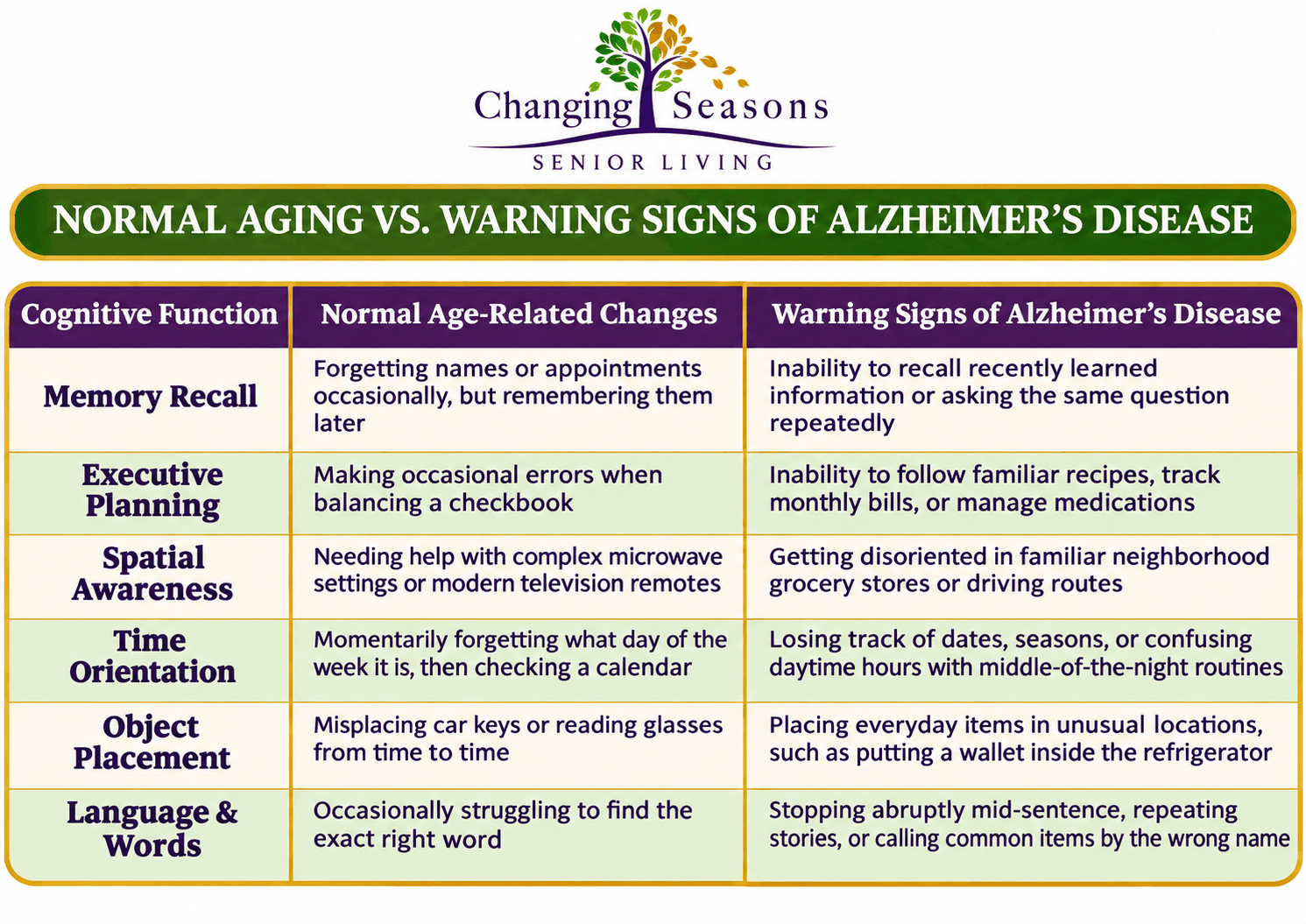
Understanding these distinctions helps family members avoid dismissing serious symptoms as mere eccentricity, allowing them to seek an accurate medical evaluation and explore specialized care programs before a safety crisis occurs.
When In-Home Care Is No Longer Safe for Seniors with Dementia
Many families attempt to manage cognitive decline at home for as long as possible. Adult children often step in as unpaid caregivers, coordinating medical visits, preparing meals, and checking on safety daily. However, as neurological changes advance, home environments often present hazards that private caregiving cannot safely accommodate.
Medical authorities and public health data from the Alzheimer's Association report that 6 in 10 individuals living with dementia will experience at least one episode of wandering. In South Texas, where sudden temperature shifts and expansive suburban layouts make outdoor disorientation life-threatening, unmonitored exits present severe risks. Families who notice a parent pacing near doorways, attempting to "go to work," or leaving the stove burner lit unsupervised must reevaluate home safety. Our detailed guide on dementia wandering safety precautions outlines the urgent physical modifications required when wandering behaviors first emerge.
Caregiver physical and emotional burnout is another decisive factor. When a loved one develops late-day agitation and confusion, managing severe sundowning in seniors with dementia leads to chronic sleep deprivation for family members. When a caregiver's own health declines due to round-the-clock supervision demands, transitioning to dedicated Alzheimer's memory care San Antonio programs ensures both the parent and caregiver regain a sustainable quality of life.
What Sets Specialized Alzheimer's Memory Care in San Antonio Apart
Families frequently ask how specialized memory care differs from traditional assisted living. While standard assisted living offers personal assistance with bathing, dressing, and medication administration, dedicated dementia care introduces clinical protocols, architectural safeguards, and communication therapies explicitly structured for cognitive loss.
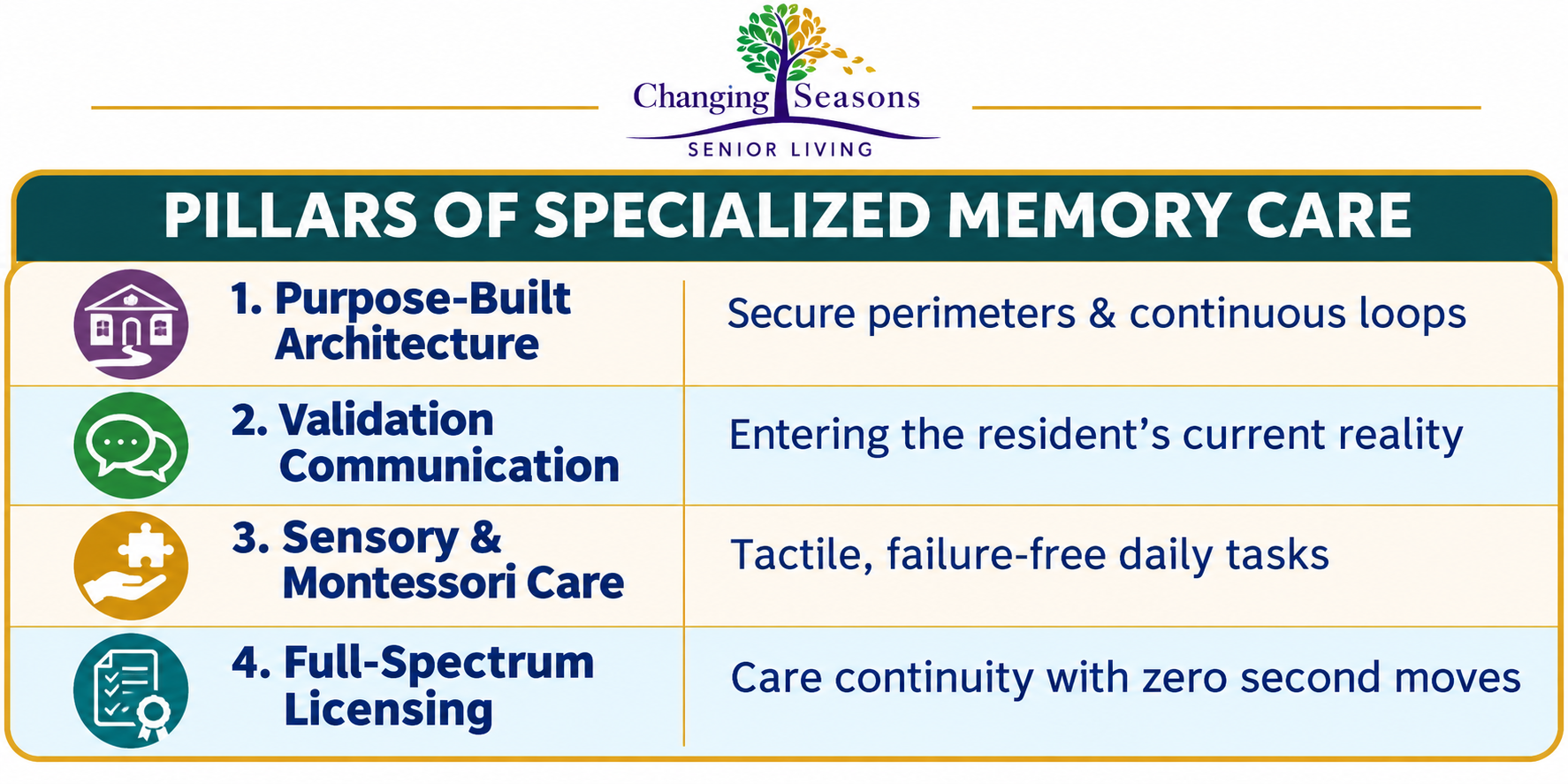
1. Secure, Cottage-Style Architectural Design
Large, commercial institutions with long, identical hallways and loud intercom systems frequently trigger sensory overload and panic in dementia patients. In contrast, our dedicated memory care neighborhood at the Cottages at Danny Kaye in San Antonio utilizes an intimate, single-story footprint. The cottage layout centers around an open kitchen and home-style living room, creating visual cues that help residents navigate independently. Enclosed outdoor walking courtyards allow seniors to enjoy fresh air and sunshine without risk of elopement.
2. Dementia-Trained Staff and Validation Techniques
Confronting or correcting someone experiencing memory loss with rigid logic frequently produces severe agitation and withdrawal. Professional dementia caregivers utilize validation techniques, meeting residents within their personal reality, validating emotional states, and gently redirecting anxiety.
3. Montessori-Inspired and Sensory Activities
Keeping neural pathways active requires meaningful, failure-free routines. Instead of passive television viewing, our communities incorporate tactile tasks, sorting stations, music reminiscing, and culinary sensory experiences. These therapeutic methods, detailed in our resource on therapeutic memory care activities for seniors, help residents maintain their motor skills and preserve a sense of personal accomplishment.
4. Eliminating Relocation Stress Through Full-Spectrum Licensing
One of the most distressing experiences for a senior with dementia is being forced to move to a different facility as their physical care needs advance. Repeated moves cause Relocation Stress Syndrome, often resulting in rapid cognitive decline and emotional withdrawal. Every Changing Seasons community is licensed for the full range of assisted living care in Texas. This means residents receiving Alzheimer's memory care San Antonio services remain in their familiar private rooms, cared for by the same familiar staff, regardless of how their needs progress over time.
Navigating Local San Antonio Dementia Resources and Financial Support
Navigating an Alzheimer’s diagnosis is easier when families leverage regional support systems:
- Alamo Area Agency on Aging (AAAA): Provides family caregiver resources, respite care coordination, and educational workshops for residents across Bexar County.
- The Alzheimer’s Association San Antonio & South Texas Chapter: Offers 24/7 support hotlines, in-person caregiver support groups, and regional clinical trial connections.
- Veterans Aid and Attendance Pension: Wartime veterans and their surviving spouses may qualify for substantial, tax-free monthly financial pensions to help pay for assisted living or specialized memory care. You can review eligibility criteria in our guide on how to pay for assisted living in Texas using VA benefits.
- State Health Guidelines: Families evaluating community licenses can reference regulatory standards through the Texas Health and Human Services Commission (HHSC), ensuring their chosen provider meets strict state care mandates.
Selecting an Alzheimer's memory care San Antonio community is not simply about securing physical supervision. It is about providing an aging parent with an environment where they feel respected, secure, and understood during every stage of their journey. At Changing Seasons Senior Living, our owner Danny Kitchen and our dedicated staff walk beside local families through every step of this transition.
If you are noticing cognitive changes in a loved one this November, contact our San Antonio care team at (210) 540-8288 or Schedule a Tour Today to visit our specialized memory care community at the Cottages at Danny Kaye.
See also:
Recognizing the Right Time: A Guide for Families Considering Assisted Living
The Power of Connection: Why Social Life is the Heart of Senior Living
Author: Changing Seasons Senior Living Team

Even if we are not the right fit, let us be your resource. We know the communities in this area and can help you find the right place for your loved one.